
“We believe technology must remain human-centric, and research must address the real challenges people face today — serving all communities equitably.
Through collaborative applied research, we design practical, scalable non-profit solutions that strengthen communities and promote cognitive resilience across India. Public-serving innovations must remain affordable, accessible, and protected within a public-good intellectual property framework. ” — AARC Philosophy
Background & Purpose
India is facing a growing mental wellness challenge that is spreading silently across the country. It is driven by nuclear families, lifestyle changes, academic pressure, urban stress, stress by new Tech Trends and so on.
At the same time, there are very few mental health professionals for the population (as global reports like WHO highlight) – making it difficult for many people to get help…
At AARC, we aim to address this gap by connecting research, technology, and real-world problem solving in partnership with India’s Young Talent.
How We Work?
At AARC, we focus on applied research. This means we don’t stop at understanding problems — we work on ways to reduce their impact over time.
- We study patterns and root causes of mental wellness challenges
- We build preventive frameworks, not just reactive solutions
- We design accessible and affordable tools that can support people across different cognitive needs
- We generate research insights that can help policy makers take better decisions
- We also focus on building public-good IP — so that solutions remain open, scalable, and not restricted by high costs.
A key part of our work is trend analysis — understanding how problems vary:
- Across regions
- Across age groups
- Across gender and professions
- Across different social and environmental conditions
This helps move from assumptions to evidence.
From Research to Real-World Solutions
No. We take research further — into real-world solutions. We convert research insights into:
- Practical tools
- Pilot-ready models
- Scalable frameworks
And we don’t do this alone.
We work closely with:
- Domain experts
- Research and academic institutions
- Technology practitioners
- Community and field partners
The goal is simple – make sure ideas don’t stay as documents, but become usable solutions in the real world.
In brief, our vision and mission are centered around the above philosophy and approach –
What is AARC ?
Akshara Applied Research Center (AARC) is a non-profit applied research institution focused on strengthening human cognitive sustainability across life systems.
Background & Purpose
India is facing a growing mental wellness challenge that is spreading silently across the country. It is driven by nuclear families, lifestyle changes, academic pressure, urban stress, stress by new Tech Trends and so on.
At the same time, there are very few mental health professionals for the population (as global reports like WHO highlight) – making it difficult for many people to get help…
At AARC, we aim to address this gap by connecting research, technology, and real-world problem solving in partnership with India’s Young Talent.
Building research-driven systems that strengthen human cognition, social resilience, and sustainable communities.
• To advance applied research that transforms real societal challenges into practical, scalable solutions
• To strengthen mental wellness, inclusive education, and environmental resilience through research-backed frameworks
• To bridge the gap between research, technology, policy, and community implementation
• To enable public institutions and communities with deployable models that improve wellbeing and social systems
• To contribute to India’s long-term cognitive sustainability and societal resilience
Designing preventive, inclusive, and ethical systems for cognitive wellbeing and societal resilience.
Transforming societal challenges into validated, ethical, and scalable solutions through applied research.
• To design preventive mental wellness architectures that operate upstream of crisis
• To build cognitive-inclusive education and workforce frameworks
• To integrate environmental determinants into mental-health and learning policy
• To create governance-ready, ethically structured, scalable public-good models
• To ensure AI systems remain supervised, transparent, and assistive
This mission reflects AARC’s role in identifying societal problems, conducting applied research, designing solutions, and deploying them through institutions and community networks.
Building research-driven systems that strengthen human cognition, social resilience, and sustainable communities.
Designing preventive, inclusive, and ethical systems for cognitive wellbeing and societal resilience.
Transforming societal challenges into validated, ethical, and scalable solutions through applied research.
• To advance applied research that transforms real societal challenges into practical, scalable solutions
• To strengthen mental wellness, inclusive education, and environmental resilience through research-backed frameworks
• To bridge the gap between research, technology, policy, and community implementation
• To enable public institutions and communities with deployable models that improve wellbeing and social systems
• To contribute to India’s long-term cognitive sustainability and societal resilience
• To design preventive mental wellness architectures that operate upstream of crisis
• To build cognitive-inclusive education and workforce frameworks
• To integrate environmental determinants into mental-health and learning policy
• To create governance-ready, ethically structured, scalable public-good models
• To ensure AI systems remain supervised, transparent, and assistive
This mission reflects AARC’s role in identifying societal problems, conducting applied research, designing solutions, and deploying them through institutions and community networks.
AARC Chapters
Our Chapters span Mental Wellness, Cognitive Inclusion, and Cognitive Ecology—covering emotional stability, functional capability, and environmental influence.
This integrated model ensures research translates into real-world impact across life systems and society.

Cognitive Resilience
Research on mental stability, early intervention systems, caregiver support, and societal stress factors affecting human wellbeing.

Cognitive Inclusion
Research on assistive tools, adaptive systems, and frameworks enabling individuals with diverse cognitive abilities to participate equally in education, work, and society.
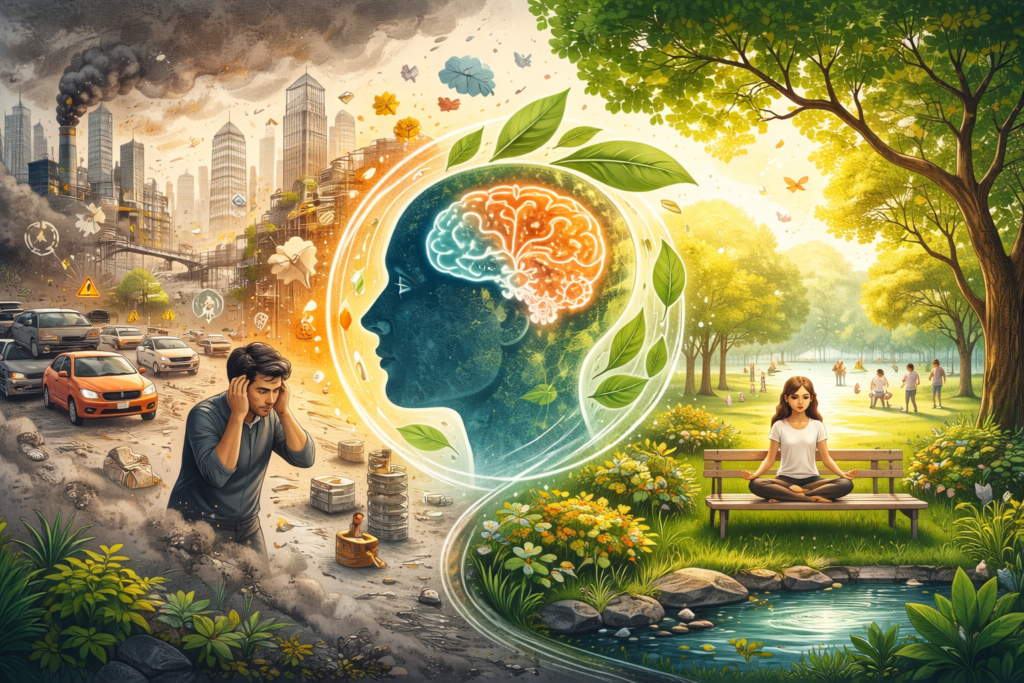
Cognitive Ecology
Research on how environmental conditions – such as pollution, urban design, noise, and green spaces – affect cognition, emotional stability, and long-term mental health.
AARC - Dual Pillar Model
A research-governed system where the Intellectual Pillar designs and governs solutions, while the Execution Pillar builds and deploys them responsibly.

Intellectual Pillar
- AARC Core Research Team
- Research-Driven Problem Discovery
- Evidence-Based Solution Design
- Ethics-First Governance Framework
- Policy and Regulatory Alignment
- Scalable Public-Good Architecture
- Scientific Validation and Impact Metrics

Execution Piller
- Structured Tech Volunteer Network
- Supervised Engineering and Development
- Rapid Prototype and MVP Building
- Scalable Implementation Capacity
- Field Pilots and Real-World Deployment
- Impact Monitoring and Feedback Loops
Impact & Value
AARC transforms critical societal challenges into practical, scalable solutions—strengthening public systems, supporting communities, and enabling long-term national progress.
Across mental wellness, cognitive inclusion, and environmental impact on the human mind, we deliver measurable impact where it matters most.
Community Impact
Improves access to mental wellness, education, and environmental support
Enables early detection and preventive care systems
Delivers solutions usable in rural and low-resource settings
Builds long-term wellbeing and resilience in communities
Strengthening Public Systems
Supports government programmes with research-backed frameworks
Provides cost-effective, scalable tools for public institutions
Integrates with existing systems without disruption
Enables better service delivery through structured models
Policy & National Value
Generates evidence for better policy decisions
Creates public-good intellectual property (no vendor lock-in)
Builds scalable models reusable across states and sectors
Enables transparent impact measurement for governance
Employment & Skill Development
Provides real-world exposure to youth and volunteers
Builds practical skills through applied research projects
Creates a socially responsible innovation mindset
Strengthens employability and future workforce readiness
AARC Founders
AARC Founders, Vijay and Sujatha, bring a 16-year shared journey navigating India’s mental-wellness and early-support systems, gaining first-hand insight into the practical and systemic challenges families face. This experience shaped AARC’s commitment to building accessible, structured, and nationally scalable solutions.
Vijay Kumar Yarabolu
Vijay Kumar Yarabolu is a Senior Enterprise Architect with over two decades of experience designing large-scale, regulated technology systems across financial services, fraud detection, data platforms, and application security domains.
He holds a Master’s degree(M.Tech) in Data Science, an MSc in Information Technology, and advanced executive certifications from IIM Calcutta and IIT Bangalore in Data Science and Blockchain Systems respectively. He also brings overseas experience across complex enterprise environments.
He has over 100 patent filings with the United States Patent and Trademark Office, including more than 40 granted patents and approximately 50 AI-centric innovations spanning application security, authentication, fraud prevention, and intelligent systems architecture.
His work focuses on enterprise AI governance, secure system design, responsible AI controls, and architecture frameworks aligned with regulatory and compliance standards.
At AARC, he provides architectural oversight and governance guidance to ensure that applied research outputs meet institutional-grade standards before deployment.
Sujatha Yarabolu
Sujatha Yarabolu holds a Master’s degree in Information Technology and serves as the full-time Executive Director and institutional focal point of Akshara Applied Research Center (AARC). She leads the foundation’s strategic direction, operational governance, and program development across its Mental Wellness and Inclusive Education initiatives.
She conceptualized and developed AARC’s 3A (Authorized AI-Assisted) Model — a human-supervised framework designed to integrate AI responsibly into India’s mental-wellness ecosystem. The 3A architecture establishes structured collaboration between authorized doctors, trained community helpers, and regulated digital assistants, ensuring that AI functions strictly under certified human oversight.
She is the named patent applicant on behalf of AARC for the AI-Assisted Mental Wellness platform framework and its supervised multi-layer validation architecture. Her leadership ensures that the foundation’s initiatives remain ethically grounded, socially aligned, and focused on national-scale public-good deployment.